Book Appointment Now

Tibia Fracture Healing Time: Recovery Stages and Treatment
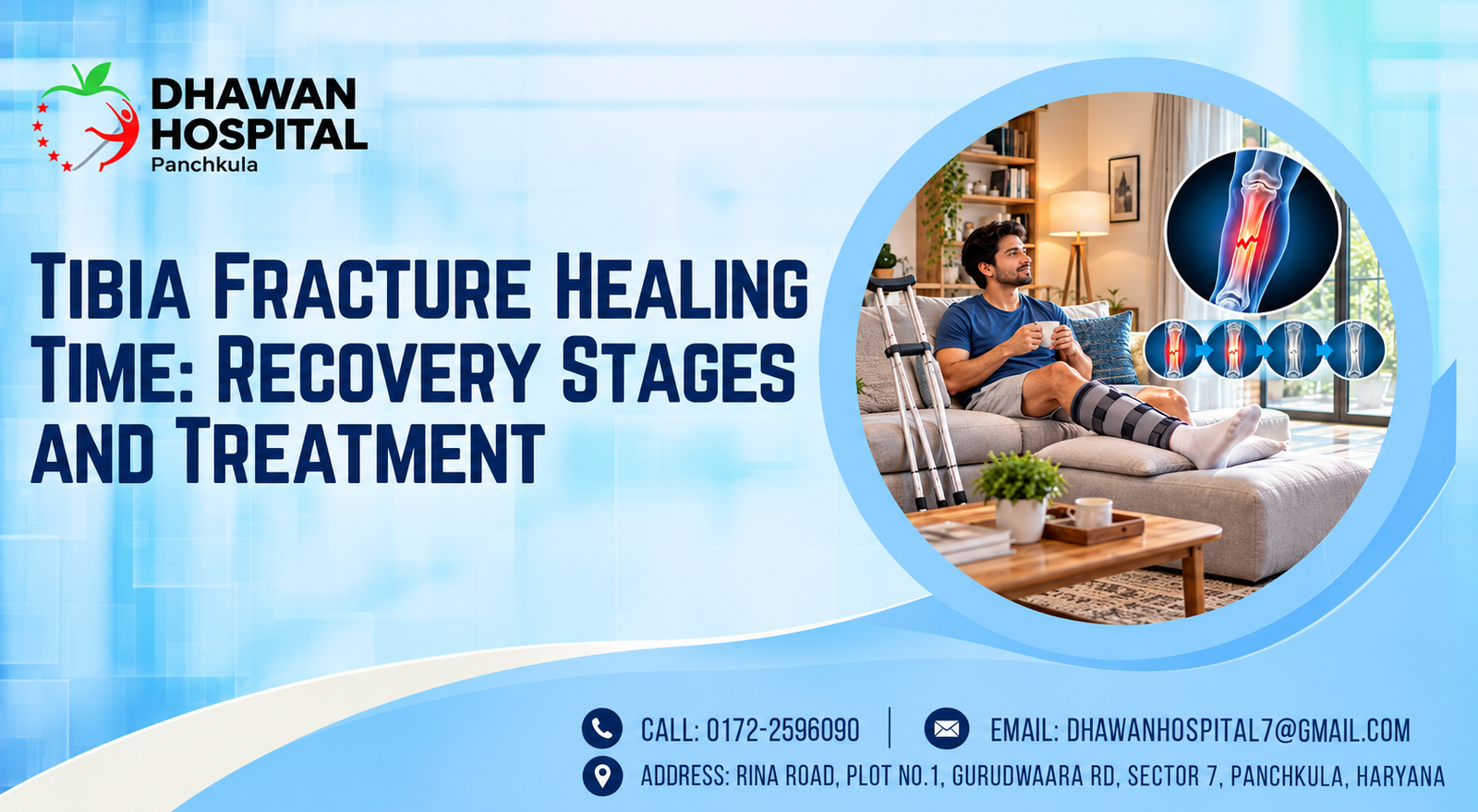
Are you searching for tibia fracture healing time because you or someone close to you has a broken leg? A tibia fracture can make walking and standing difficult. The tibia fracture recovery time depends on the severity of the injury, the treatment used, and your overall health.
Understanding the tibia fracture healing stages can help you prepare for recovery. Some fractures heal with a cast or brace, while others require surgery. Following medical advice and completing tibia fracture rehabilitation can support bone healing and help you gradually return to daily activities.
What Is a Tibia Fracture?
A tibia fracture is a break in the tibia, also known as the shinbone. It is the larger bone in the lower leg and supports much of your body weight. A fracture can occur due to a fall, a road accident, a sports injury, or a strong direct impact. The severity may range from a small crack to a complete break in the bone.
The tibia fracture healing time depends on the type and location of the break. Some fractures can be treated with a cast or brace, while severe or displaced fractures may require surgery. Early diagnosis, proper treatment, and regular medical follow-ups help support the tibia bone healing process and reduce the risk of complications.
What Are the Common Symptoms of a Tibia Fracture?
Common tibia fracture symptoms include severe pain, swelling, tenderness, and difficulty putting weight on the affected leg. Symptoms may appear immediately after a fall, accident, or sports injury. The severity depends on the type of fracture, and some injuries may cause visible changes in the shape of the lower leg.
Watch for these common signs:
- Severe pain: Pain that worsens when moving or touching the injured area.
- Swelling and bruising: Swelling, tenderness, or skin discoloration around the shin.
- Difficulty walking: Trouble standing or putting weight on the affected leg.
- Visible deformity: The leg may appear bent or out of its normal position.
- Open wound: In severe fractures, the broken bone may pierce the skin.
If you experience these symptoms, seek prompt medical attention to assess the injury and determine the right tibia fracture healing time. Avoid walking on the injured leg or trying to straighten it yourself.

What Are the Different Stages of Tibia Fracture Healing?
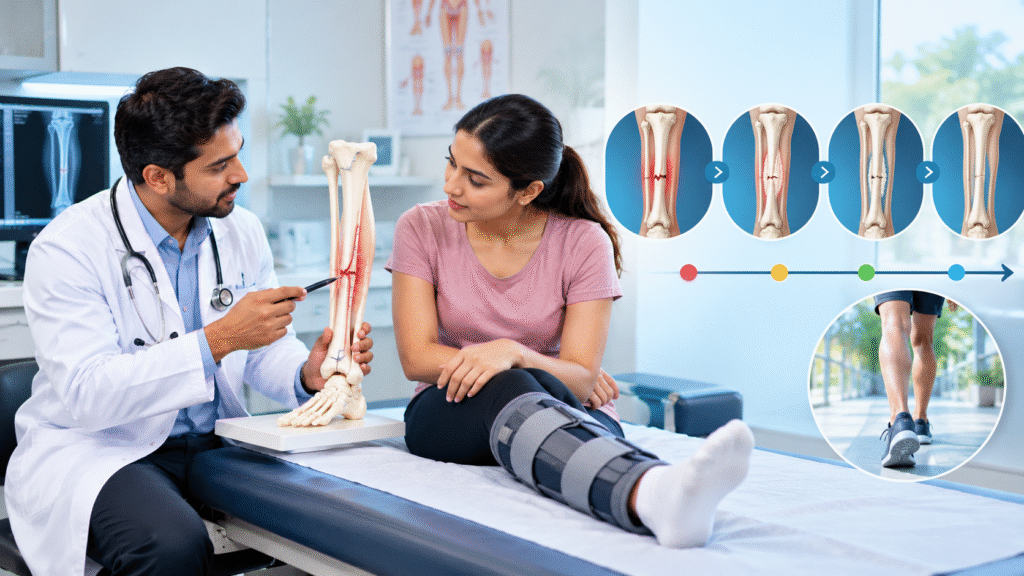
The tibia fracture healing stages involve several steps as the body repairs the broken bone. Understanding the tibia bone healing process can help you know what to expect during recovery.
1. Inflammatory Stage
This stage begins immediately after the fracture. Blood collects around the broken bone, forming a clot that helps start the healing process. Pain, swelling, and bruising are common during this phase.
2. Soft Callus Formation
The body begins forming soft tissue and cartilage around the fracture. This temporary structure connects the broken bone ends and provides early stability. The area still needs protection from excessive movement and weight-bearing.
3. Hard Callus Formation
The soft callus gradually develops into harder bone tissue. The fracture becomes more stable, but it may not be strong enough for normal activities. Your doctor will use examinations and X-rays to assess healing progress.
4. Bone Remodelling Stage
During remodelling, the newly formed bone gradually reshapes and strengthens. This stage can continue for months or longer after the fracture has initially healed.
The tibia fracture healing time varies from person to person. Follow your orthopedic doctor’s advice about movement, weight-bearing, and follow-up X-rays rather than relying on pain alone to decide when to resume normal activities.
About Dhawan Hospital
Dhawan Hospital is a multispeciality healthcare facility in Sector 7, Panchkula, committed to providing compassionate, patient-focused medical care. With over 20 years of trusted care, a NABH-certified facility, and 24/7 emergency and ICU support, the hospital serves patients across Panchkula and beyond.
The hospital offers orthopaedic services and physiotherapy and rehabilitation support to help patients manage bone and joint conditions. For guidance on tibia fracture healing time, patients can seek medical evaluation to understand their injury, discuss suitable treatment options, and plan recovery based on their individual needs.
When Should You See an Orthopedic Doctor for a Tibia Fracture?
You should see an orthopedic doctor immediately if you suspect a tibia fracture after a fall, accident, or sports injury. Prompt assessment helps determine the extent of the fracture and the appropriate tibia fracture treatment.
Seek emergency medical care if you notice any of these warning signs:
- Severe or worsening pain and swelling.
- An open wound or bone visible through the skin.
- A visibly deformed or unstable leg.
- Numbness, tingling, or a cold, pale foot.
- Increasing tightness or pain that seems out of proportion to the injury.
You should also consult your doctor if pain or swelling worsens during recovery, or if you develop redness, fever, or discharge from a surgical wound. Regular follow-ups help monitor tibia fracture healing time and identify possible complications early.
Why Choose Dhawan Hospital for Tibia Fracture Treatment in Panchkula?
Choosing the right healthcare facility can help you understand your injury and follow an appropriate recovery plan. Dhawan Hospital provides orthopaedic care and rehabilitation services to support patients with bone, joint, and mobility concerns. If you need tibia fracture treatment in Panchkula, seeking timely medical guidance can help you make informed decisions about your care.
Here are some reasons to consider Dhawan Hospital:
- Orthopaedic care: Consult an orthopaedic specialist to assess your fracture and discuss suitable treatment options.
- Physiotherapy and rehabilitation: Access rehabilitation guidance to help restore movement and strength when medically appropriate.
- Patient-focused support: Receive care tailored to your individual condition and recovery needs.
- NABH-certified facility: Access healthcare services at a facility committed to patient safety and quality standards.
- 24/7 emergency and ICU support: Emergency services are available for urgent medical needs.
Whether you need guidance on tibia fracture healing time or support during recovery, follow your doctor’s recommendations and attend scheduled follow-up appointments to monitor healing progress.
Get Expert Care for Tibia Fracture Treatment in Panchkula
A tibia fracture needs timely medical attention and the right recovery plan to support proper bone healing. If you have leg pain, swelling, or difficulty walking after an injury, consult an orthopedic doctor to understand your treatment options and expected tibia fracture healing time. At Dhawan Hospital, Sector 7, Panchkula, you can seek guidance for bone injuries and rehabilitation needs.
Contact Information
Dhawan Hospital
Address: Plot Number 1, Dhawan Hospital, Rina Road, Gurudwaara Rd, Sector 7, Panchkula, Haryana
Phone: 9368039657
Email: dhawanhospital7@gmail.com
Conclusion
The tibia fracture healing time depends on the severity of the break, the treatment provided, and your overall health. While some fractures heal with a cast or brace, others require surgery and structured rehabilitation. Following medical advice, attending follow-up appointments, and avoiding weight-bearing too early can support a safer recovery.
If you suspect a fracture or have concerns about your tibia fracture recovery time, consult an orthopedic doctor for an accurate diagnosis and personalized care plan. Dhawan Hospital in Panchkula provides orthopaedic care and rehabilitation support to help patients work towards a safe return to daily activities.
FAQs – Tibia Fracture Healing Time: Recovery Stages and Treatment
Q1. How long does a tibia fracture take to heal?
Ans. A tibia fracture usually takes around 3–6 months to heal, depending on the severity of the fracture and the treatment required.
Q2. Can a tibia fracture heal without surgery?
Ans. Yes, stable fractures may heal with a cast or brace if the bone remains properly aligned.
Q3. When can I walk after a tibia fracture?
Ans. Walking depends on the fracture type and healing progress. Follow your doctor’s advice before putting weight on the injured leg.
Q4. What are the signs of a healing tibia fracture?
Ans. Reduced pain and swelling, improved movement, and progress on X-rays may indicate healing.
Q5. Does physiotherapy help after a tibia fracture?
Ans. Yes, guided physiotherapy can help restore strength, flexibility, balance, and mobility after a tibia fracture.