Book Appointment Now

Overactive Bladder Treatment in Chandigarh: Symptoms, Causes and Care Options
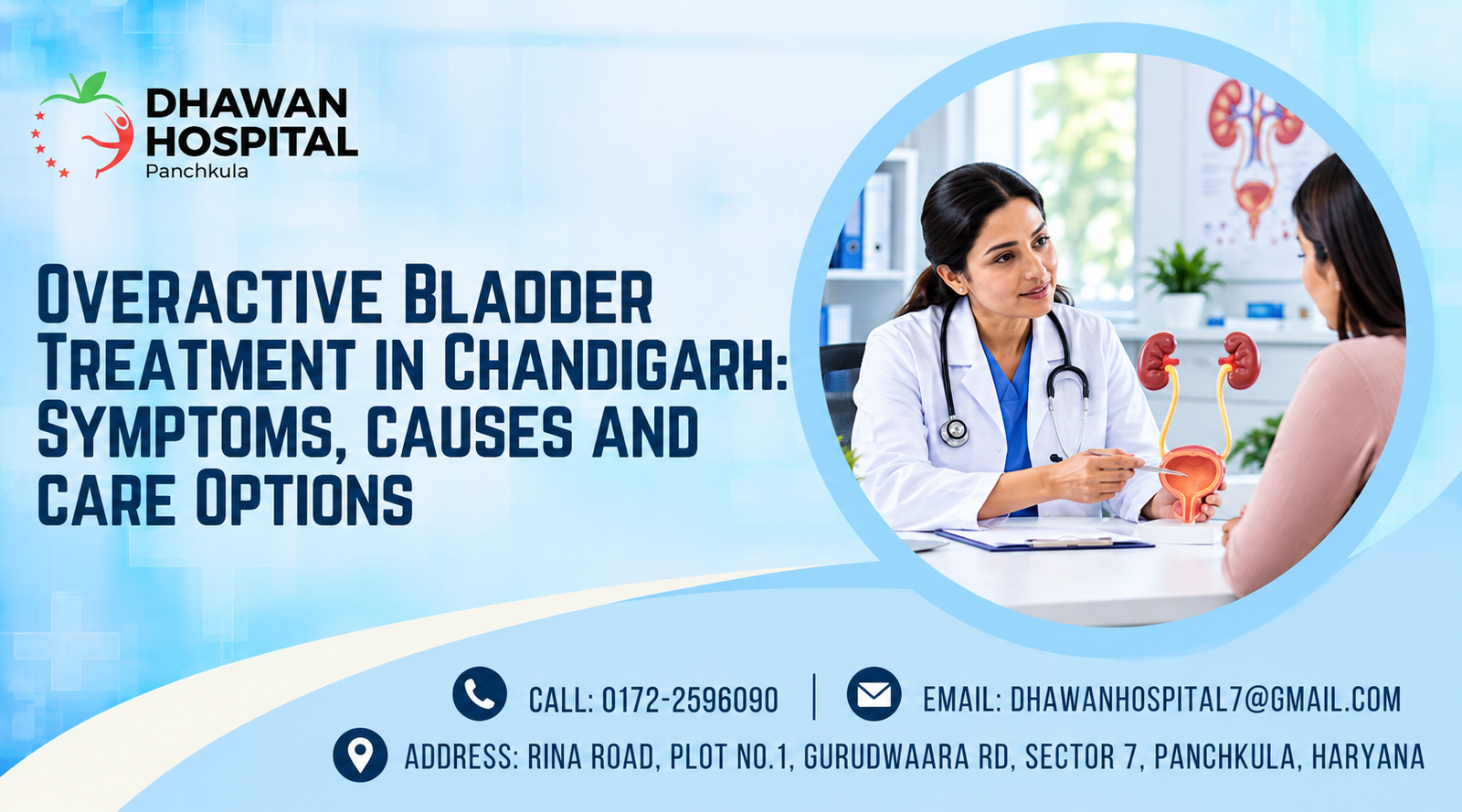
Are you searching for overactive bladder treatment in Chandigarh because you often feel a sudden urge to urinate or need to use the bathroom frequently? Overactive bladder syndrome can affect your sleep, daily routine, work, and confidence. Common symptoms include frequent urination, nighttime bathroom visits, and urine leakage before reaching the toilet.
Treatment may include bladder training, lifestyle changes, pelvic floor exercises, and medicines when needed. A medical assessment helps identify the cause and determine the right approach. If you are looking for a urologist in Chandigarh, Dhawan Hospital in nearby Panchkula offers urology services to help patients manage urinary and bladder concerns.
Quick Answer
Overactive bladder treatment may include bladder training, pelvic floor exercises, lifestyle changes, and prescribed medicines. A urologist can assess your symptoms, rule out other urinary conditions, and recommend a suitable treatment plan. If frequent urination or sudden urgency affects your daily life, seek medical advice.
Key Takeaways
- Overactive bladder causes a sudden, difficult-to-control urge to urinate.
- Common symptoms include frequent urination, nighttime bathroom visits, and urine leakage.
- Several factors can contribute to bladder control problems.
- Bladder training and lifestyle changes may help manage symptoms.
- A doctor may recommend medicines or other treatments when needed.
- Blood in the urine, painful urination, or difficulty passing urine needs medical assessment.
- Dhawan Hospital in Panchkula provides urology services for patients in the Chandigarh region.
What Is an Overactive Bladder?
An overactive bladder (OAB) is a condition that causes a sudden, strong urge to urinate that may be difficult to control. It often leads to frequent bathroom visits during the day and at night. Some people also experience urinary incontinence, which means urine leaks before they can reach the toilet.
An overactive bladder occurs when the bladder muscle contracts at the wrong time, even when the bladder is not full. However, similar symptoms can result from urinary tract infections, diabetes, or other medical conditions. A doctor can assess your symptoms and recommend suitable overactive bladder treatment based on the underlying cause.
What Are the Common Symptoms of an Overactive Bladder?
The most common overactive bladder symptoms include a sudden urge to urinate, frequent bathroom visits, and waking up at night to pass urine. Some people may also experience urine leakage when they cannot reach the toilet in time.
Watch for these common signs:
- Sudden urge to urinate: A strong, difficult-to-control need to pass urine.
- Frequent urination: Needing to urinate more often than usual during the day.
- Nighttime urination: Waking up repeatedly at night to use the bathroom, also called nocturia.
- Urine leakage: Losing urine before reaching the toilet due to urgency.
- Bladder control problems: Finding it difficult to delay urination or manage sudden urges.
These symptoms can affect your sleep, comfort, and daily activities. If they persist or interfere with your routine, consult a doctor about overactive bladder treatment in Chandigarh to identify the cause and discuss suitable treatment options.

What Causes an Overactive Bladder?
Overactive bladder causes can vary from person to person. The condition often develops when the bladder muscle contracts involuntarily, creating a sudden urge to urinate even when the bladder is not full. Sometimes, the exact cause remains unclear.
Common factors that may contribute to overactive bladder syndrome include:
- Urinary tract infections (UTIs): Infections can cause urgency and frequent urination.
- Age-related changes: Bladder control may change with age.
- Neurological conditions: Certain conditions affecting the brain or nerves can interfere with bladder signals.
- Diabetes: High blood sugar and related urinary changes may increase bathroom visits.
- Lifestyle habits: Caffeine and alcohol can worsen urinary urgency in some people.
- Constipation: Pressure from a full bowel can affect bladder function.
- Certain medicines: Some medications may increase urine production.
Frequent urination does not always mean you have an overactive bladder. If you are considering overactive bladder treatment in Chandigarh, a doctor may recommend urine tests, a review of your medical history, or other assessments to identify the cause and guide appropriate treatment.
What Lifestyle Changes Can Help Manage an Overactive Bladder?
Simple daily habits can help reduce urinary urgency and frequency and improve bladder control.
- Limit bladder irritants: Reduce caffeine, tea, coffee, and alcohol if they worsen symptoms.
- Drink enough water: Avoid excessive fluids, but do not restrict water too much.
- Try bladder training: Gradually increase the time between bathroom visits.
- Practice pelvic floor exercises: Kegel exercises may help improve bladder control.
- Manage constipation: Eat fibre-rich foods and stay active.
- Track symptoms: Maintain a bladder diary to record fluid intake and bathroom visits.
These lifestyle changes for overactive bladder may help manage symptoms. If problems persist, consult a doctor about further treatment options.
About Dhawan Hospital
Dhawan Hospital is a NABH-certified healthcare facility in Sector 7, Panchkula, serving patients from Panchkula and the nearby Chandigarh region. The hospital offers urology services for people experiencing urinary and bladder concerns.
For those seeking overactive bladder treatment in Chandigarh, consulting a qualified urology specialist can help identify the cause of symptoms and determine suitable care options. Dhawan Hospital focuses on patient-centred care and provides medical guidance for urinary health concerns.
When Should You Consult a Urologist in Chandigarh?
You should consult a urologist in Chandigarh for overactive bladder treatment in Chandigarh if frequent urination, sudden urges, or nighttime bathroom visits begin to affect your daily life. Early medical assessment can help identify the cause and determine the right treatment.
Seek medical advice if you experience:
- Frequent urination that persists or worsens.
- Sudden urges that are difficult to control.
- Urine leakage before reaching the toilet.
- Repeated nighttime bathroom visits that disturb your sleep.
- Burning or pain while urinating.
- Blood in your urine or difficulty passing urine.
Blood in the urine, fever with urinary symptoms, or an inability to urinate requires prompt medical attention. Do not ignore ongoing bladder control problems, as several urinary conditions can cause similar symptoms.
Why Choose Dhawan Hospital for Overactive Bladder Treatment in Chandigarh?
Choosing Dhawan Hospital for overactive bladder treatment in Chandigarh offers patients access to urology services and guidance for managing urinary and bladder concerns.
- NABH-Certified Facility: A healthcare facility focused on quality and patient-centred care.
- Urology Services: Medical guidance for urinary urgency, frequent urination, and bladder control problems.
- Specialist Evaluation: Assessment of symptoms and medical history to help identify possible causes.
- Individualised Care: Treatment guidance based on each patient’s condition and needs.
- Treatment Guidance: Advice on lifestyle changes, bladder training, pelvic floor exercises, and medication when appropriate.
- Convenient Regional Access: Located in Panchkula, serving patients from the nearby Chandigarh region.
If you are looking for overactive bladder treatment in Chandigarh, Dhawan Hospital can help you explore appropriate care options and take the next step towards better bladder health.

Get Medical Help for Overactive Bladder
If frequent urination, sudden urges, or nighttime bathroom visits are affecting your daily routine, consider seeking medical advice. Early evaluation can help identify the cause of your symptoms and guide suitable overactive bladder treatment.
Dhawan Hospital in Panchkula offers urology services for patients seeking overactive bladder treatment in Chandigarh and the surrounding region. Consulting a urology specialist can help you understand your bladder symptoms and explore appropriate treatment options based on your needs.
Contact Information
Dhawan Hospital
Address: Plot Number 1, Dhawan Hospital, Rina Road, Gurudwaara Rd, Sector 7, Panchkula, Haryana
Phone: 9368039657
Email: dhawanhospital7@gmail.com
Conclusion
Overactive bladder can cause frequent urination, sudden urges, and nighttime bathroom visits that disrupt everyday life. However, overactive bladder treatment in Chandigarh may include lifestyle changes, bladder training, pelvic floor exercises, and medication, depending on the cause and severity of symptoms.
If your symptoms persist or affect your quality of life, consult a urology specialist for proper evaluation. Dhawan Hospital in Panchkula offers urology services to help patients from the Chandigarh region explore suitable care options and manage their bladder health.
FAQs About Overactive Bladder Treatment in Chandigarh
Q1. What is the best treatment for an overactive bladder?
Ans. Treatment may include bladder training, lifestyle changes, pelvic floor exercises, and prescription medicines. The right option depends on your symptoms, medical history, and the underlying cause.
Q2. What are the common symptoms of an overactive bladder?
Ans. Common symptoms include a sudden urge to urinate, frequent bathroom visits, waking up at night to urinate, and urine leakage before reaching the toilet.
Q3. What causes an overactive bladder?
Ans. Possible contributing factors include involuntary bladder muscle contractions, age-related changes, neurological conditions, and certain lifestyle habits. In some cases, the exact cause is unknown.
Q4. Can an overactive bladder be treated without medication?
Ans. Yes. Bladder training, pelvic floor exercises, and lifestyle changes may help manage symptoms. A doctor can advise whether these approaches are suitable for you.
Q5. How can I reduce frequent urination?
Ans. Limit caffeine if it worsens symptoms, maintain a balanced fluid intake, manage constipation, and consider bladder training. Persistent frequent urination should be evaluated by a doctor.