Book Appointment Now

Spinal Anaesthesia in Panchkula: What You Need to Know
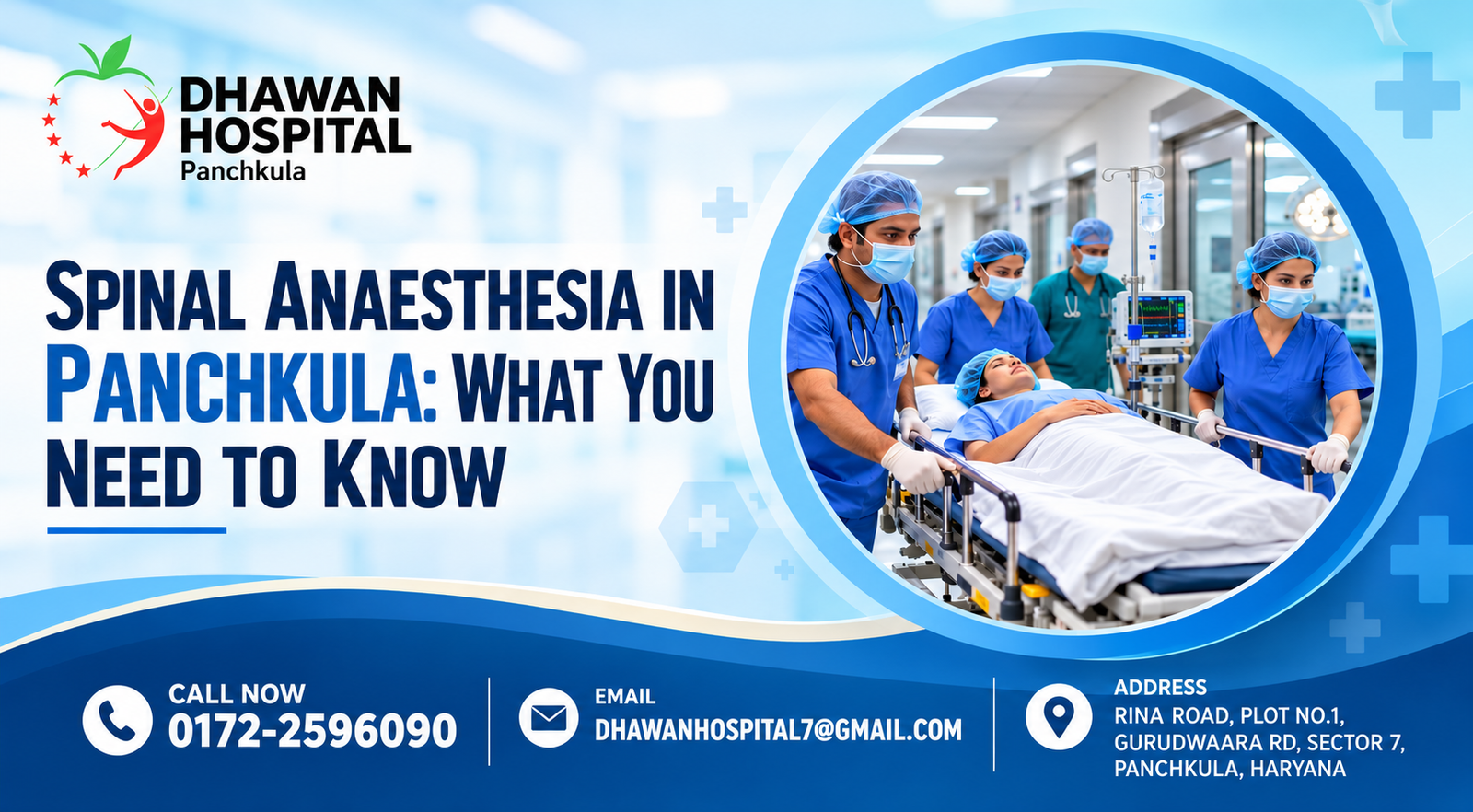
Are you preparing for surgery and wondering what spinal anaesthesia in Panchkula involves? It is normal to have questions about how the procedure works, whether you will feel pain, how long the numbness lasts, and what recovery may be like. Understanding the process can help you feel more prepared and comfortable before surgery.
At Dhawan Hospital, anaesthesia care is provided as part of surgical treatment, with attention to patient safety and continuous monitoring. Spinal Anaesthesia in Panchkula is a type of regional anaesthesia commonly used for procedures involving the lower part of the body. It temporarily blocks sensation in the lower body while you remain awake unless additional sedation is given. The choice of anaesthesia depends on your surgery, medical history, overall health, and the anaesthetist’s assessment.
When Is Spinal Anaesthesia Used?
Spinal Anaesthesia is commonly used for surgeries involving the lower part of the body. The anaesthetist chooses it based on the type of surgery, your medical history, and your overall health.
Common Uses of Spinal Anaesthesia
Some procedures where Spinal Anaesthesia for Surgery may be considered include:
- Spinal Anaesthesia for C-Section and other obstetric procedures
- Spinal Anaesthesia for Orthopaedic Surgery, such as certain knee or hip procedures
- Spinal Anaesthesia for Lower Limb Surgery
- Spinal Anaesthesia for Urological Surgery
- Certain procedures involving the lower abdomen, pelvis, or perineal area
The anaesthetist will assess whether Spinal Block Anaesthesia is appropriate for you. Factors such as your medical conditions, medications, blood-thinning medicines, allergies, and any infection near the injection site may affect the choice of anaesthesia.
What Are the Benefits of Spinal Anaesthesia in Panchkula?
Spinal Anaesthesia Benefits include effective pain control, reduced sensation during lower-body surgery, and the ability to remain awake during the procedure when appropriate. Compared with general anaesthesia, it may also avoid the need for a breathing tube in many cases.
Key Benefits of Spinal Anaesthesia
- Effective pain control: It temporarily blocks pain signals from the lower part of the body.
- Awake during surgery: You may remain conscious unless sedation is given.
- Fast onset: The numbness usually develops within a short time after the medication is given.
- Less need for general anaesthesia: For suitable lower-body procedures, a spinal block may be used instead.
- Useful after surgery: The block can provide pain relief for a period after the procedure.
- Lower-body procedures: It can be suitable for certain orthopaedic, urological, obstetric, and lower abdominal surgeries.
The benefits vary from person to person. Your anaesthetist will consider the type of surgery, your medical history, current medicines, and overall health before recommending Spinal Anaesthesia in Panchkula.

Spinal Anaesthesia vs General Anaesthesia: What Is the Difference?
Spinal Anaesthesia vs General Anaesthesia mainly differs in how much of the body is numbed and whether you remain conscious during surgery.
| Feature | Spinal Anaesthesia | General Anaesthesia |
| Consciousness | Usually awake, with sedation if needed | Unconscious during surgery |
| Area affected | Mainly lower body | Whole body |
| Pain sensation | Blocked in the anaesthetised area | Blocked throughout the body |
| Breathing support | Usually breathing independently | Breathing may require airway support |
| Common use | Lower-body procedures | Many major or complex surgeries |
| Recovery | Sensation and movement return gradually | Consciousness returns as medicines wear off |
The choice between Spinal vs General Anaesthesia depends on the type and duration of surgery, your health, medications, preferences where appropriate, and the anaesthetist’s assessment.
About Dhawan Hospital
Dhawan Hospital is a multispecialty hospital in Panchkula that provides patient-focused medical and surgical care. The hospital has experienced specialists, modern medical infrastructure, and a NABH-certified facility designed to support safe and coordinated treatment.
Anaesthesia is an important part of surgical care. The anaesthesia team assesses each patient before surgery and monitors them during the procedure. Depending on the surgery and the patient’s health, spinal Anaesthesia in Panchkula, including regional anaesthesia, may be considered as part of the overall treatment plan.
How Does Dhawan Hospital Support Spinal Anaesthesia in Panchkula and Surgical Care?
Anaesthesia Services in Panchkula at Dhawan Hospital include careful assessment, monitoring, and recovery support. The anaesthesia team considers the type of surgery, medical history, medicines, and overall health before choosing the appropriate anaesthesia approach.
Before, During and After Surgery
Before Spinal Anaesthesia Before Surgery, the team reviews relevant medical information, allergies, and medications. During surgery, vital signs and the effectiveness of the anaesthesia are continuously monitored.
After the procedure, Post Anaesthesia Care focuses on safe recovery as sensation and movement gradually return.
This coordinated approach supports safe and comfortable Spinal Anaesthesia Recovery at Dhawan Hospital.
Why Choose Dhawan Hospital for Spinal Anaesthesia in Panchkula?
Spinal Anaesthesia in Panchkula requires careful patient assessment, experienced anaesthesia care, and continuous monitoring. Dhawan Hospital combines anaesthesia and surgical care to support patients throughout their treatment.
Patients can benefit from:
- Experienced anaesthesia team: Anaesthesia care is planned according to the patient’s surgery and overall health.
- Pre-operative assessment: Medical history, medications, allergies, and other relevant factors are reviewed before the procedure.
- Continuous monitoring: Vital signs and the effectiveness of anaesthesia are monitored during surgery.
- Patient-focused care: The team explains the anaesthesia plan and addresses relevant concerns before the procedure.
- Post-operative support: Patients are monitored as the effects of spinal anaesthesia gradually wear off.
- Modern medical infrastructure: The hospital provides a coordinated environment for surgical and anaesthesia care.
The decision to use Spinal Anaesthesia for Surgery is made by the anaesthetist after assessing the individual patient and procedure. This personalized approach helps support Spinal Anaesthesia Safety and appropriate recovery.

When Should You Contact a Doctor After Spinal Anaesthesia?
Spinal Anaesthesia After Surgery usually wears off gradually, but you should contact your doctor if you develop unusual, severe, or persistent symptoms during recovery. Most temporary effects improve as the anaesthetic wears off.
Seek medical advice if you experience:
- Severe or persistent Headache After Spinal Anaesthesia
- Increasing or severe back pain
- Persistent numbness or weakness in the legs
- Difficulty passing urine that does not improve
- Fever, redness, swelling, or discharge near the injection site
- New or worsening problems with movement or sensation
- Severe dizziness, breathing difficulty, or other concerning symptoms
If symptoms feel severe or worsen quickly, seek urgent medical attention. Your doctor can assess the cause and provide appropriate treatment.
Following your discharge instructions and attending recommended follow-up can also support a smooth Spinal Anaesthesia Recovery.
Get Expert Spinal Anaesthesia in Panchkula
Looking for Anaesthesia Services in Panchkula? Dhawan Hospital provides personalised anaesthesia care with pre-surgery assessment, continuous monitoring, and recovery support.
If Spinal Anaesthesia is recommended, the anaesthetist will explain the procedure, possible side effects, and recovery. Discuss your medicines and health conditions before surgery for safer care.
Contact Information
Dhawan Hospital
Address: Plot Number 1, Dhawan Hospital, Rina Road, Gurudwaara Rd, Sector 7, Panchkula, Haryana
Phone: 9368039657
Email: dhawanhospital7@gmail.com
Conclusion
Spinal Anaesthesia in Panchkula can be a suitable option for many lower-body surgeries when recommended by an anaesthetist. It temporarily blocks pain and sensation while allowing you to remain awake in many cases. Understanding the benefits, possible side effects, and recovery process can help you feel more prepared for surgery.
If you are considering Spinal Anaesthesia for Surgery, discuss your medical history, medicines, and concerns with your anaesthesia team. Dhawan Hospital provides coordinated anaesthesia and surgical care with patient safety and recovery in focus.
FAQs – Spinal Anaesthesia in Panchkula: What You Need to Know
Q1. What is spinal anaesthesia?
Ans. Spinal Anaesthesia is a regional anaesthesia technique that temporarily blocks pain and sensation in the lower part of the body during surgery.
Q2. How long does spinal anaesthesia last?
Ans. The duration varies depending on the medication, dose, and type of surgery. Sensation and movement usually return gradually as the block wears off.
Q3. Is spinal anaesthesia painful?
Ans. You may feel a brief sting or pressure when the injection is given. The anaesthetist uses local anaesthetic to numb the area before administering the spinal block.
Q4. What are the common side effects of spinal anaesthesia?
Ans. Possible effects include temporary low blood pressure, nausea, headache, numbness, weakness, and difficulty passing urine.
Q5. Is spinal anaesthesia safe?
Ans. Spinal Anaesthesia Safety is generally good when the technique is appropriate and the patient is properly assessed and monitored. Your anaesthetist will consider your health and medical history before recommending it.