Book Appointment Now

Epilepsy Symptoms in Adults: Early Warning Signs and Diagnosis
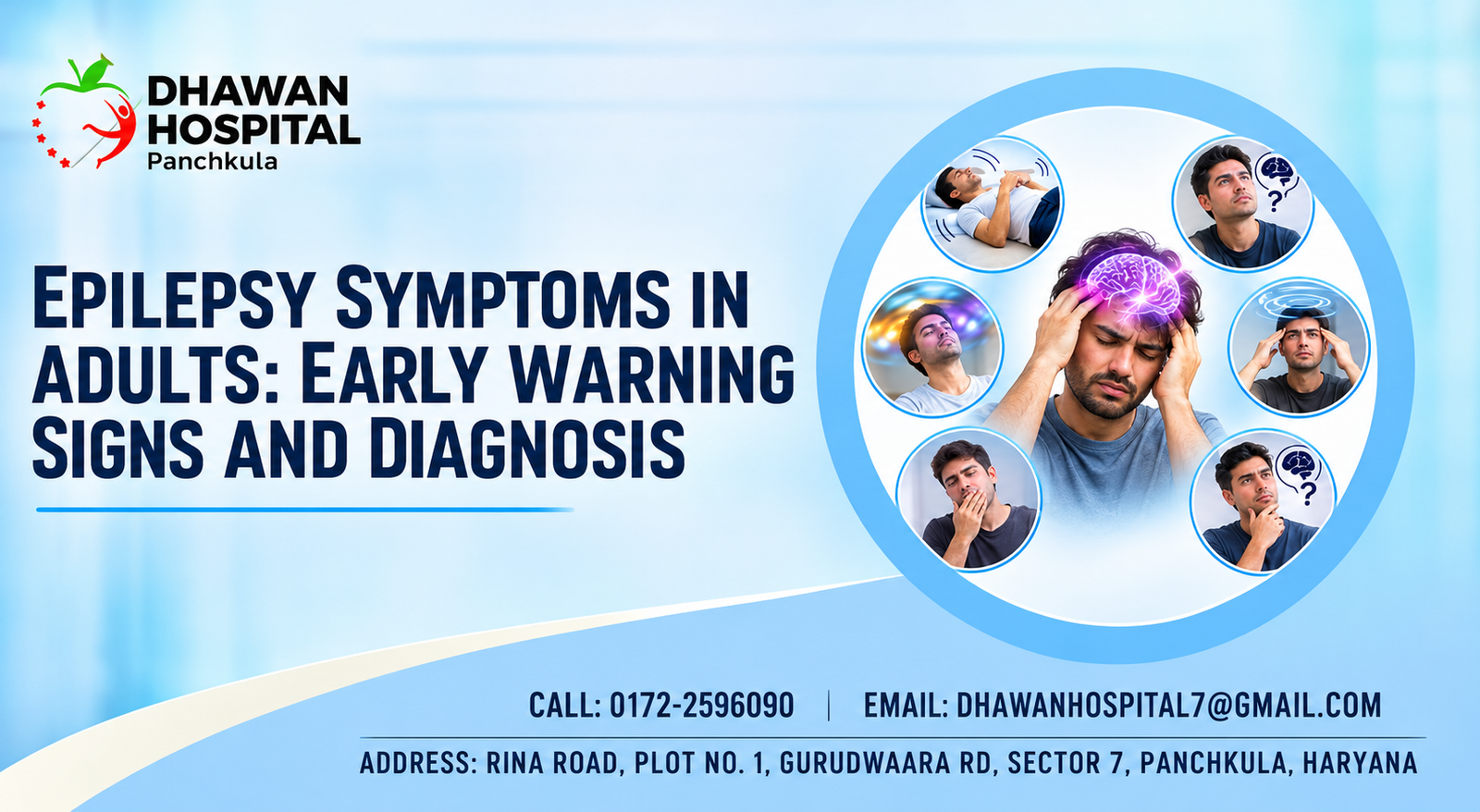
Are you searching for epilepsy symptoms in adults because you or someone close to you is experiencing sudden confusion, staring spells, unusual sensations, or uncontrolled body movements? Its symptoms can range from brief changes in awareness to strong muscle movements or loss of consciousness. Recognizing the early signs of epilepsy can help you seek timely medical attention.
Understanding the warning signs of a seizure can help you respond early and avoid delays in care. Dhawan Hospital, Panchkula, provides neurological care for brain and nerve-related concerns. Common seizure symptoms in adults, possible causes, different seizure types, diagnosis, and treatment options. It also covers when to see a doctor and why timely medical evaluation matters.
Quick Answer
Epilepsy symptoms in adults can include sudden staring, confusion, unusual sensations, memory gaps, uncontrolled body movements, or temporary loss of awareness. These seizure symptoms in adults vary by seizure type and may last from a few seconds to several minutes. A doctor can assess the symptoms and recommend suitable tests to confirm a diagnosis.
Key Takeaways
- Epilepsy symptoms in adults may include staring spells, confusion, muscle jerks, and sudden loss of awareness.
- Early signs of epilepsy can be mild and may go unnoticed.
- Different types of epileptic seizures cause different physical, emotional, and sensory changes.
- An epilepsy diagnosis may involve a medical history, neurological examination, EEG, and brain imaging.
- Epilepsy treatment often includes anti-seizure medicines and regular medical follow-ups.
- Seek urgent medical help if a seizure lasts five minutes or longer or if the person has trouble breathing.
- Knowing seizure first aid can help protect someone during an episode.
What Are the Early Epilepsy Symptoms in Adults?
The early epilepsy symptoms in adults may include sudden staring, confusion, unusual sensations, muscle jerks, and temporary loss of awareness. Some signs are mild and last only a few seconds, making them easy to miss.
Common early signs of epilepsy include:
- Sudden staring or unresponsiveness.
- Unusual smells, tastes, or feelings of fear.
- Sudden muscle jerks or uncontrolled movements.
- Confusion or memory gaps.
- Repeated movements, such as chewing or rubbing hands.
- Brief loss of awareness.
These epilepsy warning signs vary from person to person. If you notice repeated seizure symptoms in adults, seek medical evaluation.

What Are the Different Types of Epileptic Seizures?
The types of epileptic seizures depend on where abnormal electrical activity starts in the brain. The main types include focal and generalized seizures, which cause different seizure symptoms in adults.
- Focal Seizures: Start in one brain area and may cause unusual sensations, fear, or confusion. These are common focal seizure symptoms.
- Generalized Seizures: Affect both sides of the brain and may cause loss of awareness, stiffness, or jerking.
- Absence Seizures: Cause brief staring spells or reduced awareness, sometimes called absence seizures in adults.
- Myoclonic Seizures: Cause sudden, brief muscle jerks.
- Tonic-Clonic Seizures: Cause body stiffness, rhythmic jerking, and loss of consciousness.
Some mild seizure symptoms are difficult to notice. A doctor can identify the seizure type and suggest suitable care.
How Is Epilepsy Diagnosed in Adults? What Are the Treatment Options for Epilepsy?
Epilepsy diagnosis usually involves reviewing symptoms, medical history, and test results. A doctor may ask about the first seizure, its duration, and any changes in awareness or body movements. Understanding how epilepsy is diagnosed helps identify the seizure type and guide treatment.
Common diagnostic tests include:
- EEG Test for Epilepsy: Records the brain’s electrical activity to check for unusual patterns.
- MRI Scan for Epilepsy: Helps identify structural changes in the brain that may cause seizures.
- Blood Tests: May help detect infections, blood sugar changes, or other possible causes.
- Neurological Examination: Checks reflexes, movement, memory, and coordination.
Epilepsy treatment often includes anti-seizure medicines prescribed by a specialist. Some people may need other options, such as surgery or dietary therapy, if medicines do not control seizures. Avoiding personal seizure triggers, following medical advice, and attending regular check-ups can also support living with epilepsy. A neurologist can recommend care based on the person’s condition and seizure type.
About Dhawan Hospital
Dhawan Hospital is a NABH-certified multispeciality hospital in Sector 7, Panchkula, offering medical care across various specialties. The hospital provides neurology services for brain and nerve-related conditions, supported by experienced medical professionals.
With 24/7 emergency and ICU services, Dhawan Hospital focuses on timely medical attention and patient care. Dr. Loveleen Aggarwal, Consultant – Neurology, provides neurological care and guidance for patients with concerns such as epilepsy symptoms in adults and other nervous system disorders.
When Should Adults See a Doctor for Epilepsy Symptoms?
Adults should consult a doctor if they experience repeated staring spells, sudden confusion, unusual sensations, or unexplained muscle jerks. A first seizure in adults also needs prompt medical evaluation, even if the person feels normal afterward. Knowing when to see a doctor for seizures can help prevent delays in diagnosis and care.
Seek emergency medical help if:
- A seizure lasts five minutes or longer.
- Another seizure starts before the person recovers.
- The person has trouble breathing or gets injured.
- The person does not regain consciousness.
- A seizure happens in water or during pregnancy.
Recognizing epilepsy symptoms in adults and seeking timely care can help doctors identify the cause and recommend suitable treatment.
Why Choose Dhawan Hospital for Neurological Care?
Choosing the right hospital is important when dealing with epilepsy symptoms in adults or other neurological concerns. Dhawan Hospital offers multispeciality care with experienced doctors and emergency support.
Key reasons to consider Dhawan Hospital include:
- Neurology Services: Medical guidance for brain and nerve-related conditions.
- Experienced Specialists: Care from Dr. Loveleen Aggarwal, Consultant – Neurology.
- 24/7 Emergency Support: Emergency and ICU services for urgent medical needs.
- NABH Certification: A focus on quality standards and patient safety.
- Multispeciality Care: Access to different medical specialties under one roof.
If you notice early signs of epilepsy, consult a medical professional for timely assessment and appropriate guidance.

Get Medical Support for Epilepsy Symptoms in Adults
Do not ignore repeated epilepsy symptoms in adults, such as confusion, staring spells, or uncontrolled movements. Consult a neurologist for epilepsy for timely evaluation and guidance. Dhawan Hospital, Sector 7, Panchkula, offers neurological care to help patients understand their symptoms and seek appropriate medical support.
Contact Information
Dhawan Hospital
Address: Plot Number 1, Dhawan Hospital, Rina Road, Gurudwaara Rd, Sector 7, Panchkula, Haryana
Phone: 9368039657
Email: dhawanhospital7@gmail.com
Conclusion
Recognizing epilepsy symptoms in adults is important for timely diagnosis and care. Symptoms may include staring spells, confusion, unusual sensations, or uncontrolled movements. Understanding the early signs of epilepsy can help you recognize possible seizures and seek medical advice without delay.
If you experience repeated seizure-like episodes or a first seizure, consult a doctor for proper evaluation. Dhawan Hospital, Panchkula, provides neurological care and medical guidance to help patients take the right steps towards better health.
FAQs – Epilepsy Symptoms in Adults: Early Warning Signs and Diagnosis
Q1. What are the common epilepsy symptoms in adults?
Ans. Common symptoms include sudden staring, confusion, muscle jerks, unusual sensations, and temporary loss of awareness.
Q2. Can epilepsy start in adulthood?
Ans. Yes. Epilepsy can start in adulthood due to head injuries, strokes, brain infections, or other neurological conditions.
Q3. How is epilepsy diagnosed in adults?
Ans. Epilepsy diagnosis may involve a medical history, neurological examination, EEG, and MRI scan.
Q4. Can mild seizures go unnoticed?
Ans. Yes. Mild seizure symptoms like brief staring, confusion, or unusual movements may go unnoticed.
Q5. When should adults see a doctor for seizures?
Ans. Seek medical advice after a first seizure or repeated episodes. Get emergency help if a seizure lasts five minutes or longer.