Book Appointment Now

Menopause Symptoms: What to Expect and How to Manage Them
Are you experiencing menopause symptoms such as hot flashes, mood swings, or irregular periods? These changes are common during menopause and can affect your sleep, energy, and daily life. Recognizing the early signs of menopause can help you understand your body and seek medical advice when needed.
The common menopause symptoms vary from woman to woman, ranging from night sweats to fatigue and vaginal dryness. Understanding the symptoms of menopause in women can help you explore suitable treatments and lifestyle changes for better comfort and well-being.
What Is Menopause?
Menopause is a natural stage in a woman’s life when menstrual periods stop permanently, usually between the ages of 45 and 55. It occurs when the ovaries produce lower levels of estrogen and progesterone. Understanding menopause age and symptoms can help women prepare for this transition and recognize changes in their bodies.
The transition leading up to menopause is called perimenopause, during which periods may become irregular and other changes may begin. Recognizing perimenopause symptoms early can help women manage discomfort and seek guidance from a gynaecologist when needed.
What Are the Common Symptoms of Menopause?
The common menopause symptoms vary from woman to woman and may affect physical health, emotional well-being, and daily activities. Some women experience mild changes, while others may need medical support to manage discomfort.
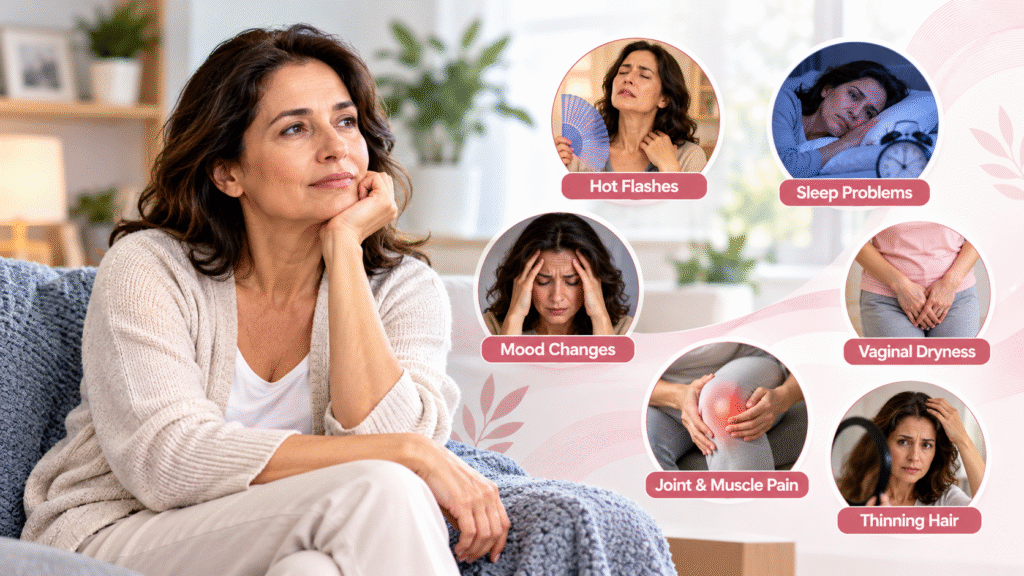
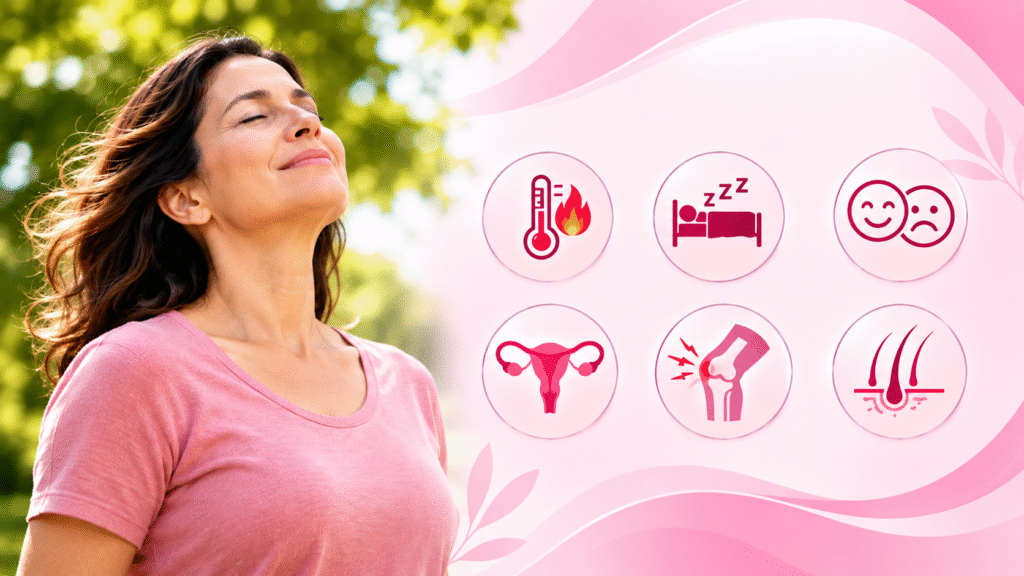
Common menopause signs and symptoms include:
- Hot flashes and night sweats
- Irregular periods before menopause
- Mood swings, anxiety, and irritability
- Sleep problems and fatigue
- Vaginal dryness and reduced libido
- Weight gain and joint pain
- Difficulty concentrating or brain fog
Recognizing these menopause symptoms can help women understand their bodies and explore suitable ways to manage discomfort with professional guidance.
What Causes Menopause Symptoms?
The main cause of menopause symptoms is the natural decline in estrogen and progesterone levels as the ovaries gradually reduce hormone production. These hormonal changes can affect body temperature, sleep, mood, bone health, and vaginal tissues.
The severity of physical symptoms of menopause may also depend on genetics, lifestyle, stress, and overall health. Understanding these causes can help women identify suitable management options and seek personalized advice from a gynaecologist.
What Treatment Options Are Available for Menopause Symptoms?
Several menopause treatment options can help women manage discomfort and improve their quality of life. Depending on symptoms, medical history, and individual needs, a gynaecologist may recommend hormone therapy, non-hormonal medicines, or lifestyle changes.
Common approaches for menopause symptom relief include:
- Menopause hormone therapy: May help relieve hot flashes and night sweats when appropriate.
- Non-hormonal treatment: Certain medicines can help manage specific symptoms.
- Vaginal treatments: Moisturisers or prescribed treatments may help with vaginal dryness.
- Lifestyle changes: Regular exercise, a balanced diet, and better sleep habits can support overall well-being.
Consult a gynaecologist to choose a safe and suitable treatment plan based on your symptoms and health history.
What Lifestyle Changes Can Help During Menopause?
Simple daily habits can help manage menopause symptoms and support overall health during this transition. A balanced diet, regular physical activity, stress management, and a consistent sleep routine may improve comfort and well-being.
Helpful lifestyle changes for menopause include:
- Eat a balanced diet rich in calcium, vitamin D, fruits, and vegetables.
- Exercise regularly to support bone health and maintain a healthy weight.
- Practise yoga, meditation, or deep breathing to manage stress.
- Keep your bedroom cool to reduce night sweats.
- Limit caffeine and spicy foods if they trigger hot flashes.
- Maintain a regular sleep schedule to improve sleep quality.
These healthy habits can support menopause symptom relief, but consult a gynaecologist if symptoms persist or interfere with daily life.
About Dhawan Hospital
Dhawan Hospital provides comprehensive healthcare services, including women’s healthcare and Obstetrics and Gynaecology care in Panchkula, Haryana. The hospital supports women through different stages of life, offering medical guidance to help them understand and manage menopause symptoms.
With guidance from Dr. Simran Dhawan, Consultant OBS & Gynae, women can seek personalized advice about hormonal changes, symptom management, and long-term health. Dhawan Hospital aims to help women make informed decisions about menopause management for women through appropriate medical evaluation and care.
When Should You See a Doctor for Menopause Symptoms?
You should consult a gynaecologist if menopause symptoms become severe, disrupt your sleep, affect your mood, or interfere with daily activities. Medical advice can help identify suitable treatments and rule out other health conditions.
Seek a menopause specialist if you experience:
- Very heavy, prolonged, or unusual bleeding.
- Any vaginal bleeding after menopause.
- Persistent anxiety, low mood, or sleep problems.
- Severe hot flashes or night sweats.
- Ongoing vaginal dryness or discomfort.
- Unexplained weight changes or persistent fatigue.
Early consultation can help you manage symptoms effectively and protect your long-term health
Why Choose Dhawan Hospital for Menopause Care?
Choosing the right healthcare provider can make managing menopause symptoms easier and help women maintain their overall well-being. Dhawan Hospital offers guidance and support for women seeking personalized menopause management for women.
- Experienced Gynaecologist: Consult Dr. Simran Dhawan, Consultant OBS & Gynae, for professional advice on hormonal changes, related symptoms, and available care options.
- Personalized Care: Receive recommendations based on your symptoms, medical history, lifestyle, and individual health needs for more effective symptom management.
- Treatment Guidance: Explore suitable menopause treatment options, including medical treatments and lifestyle changes that may help reduce discomfort and improve daily life.
- Long-Term Health Support: Learn about postmenopausal health, including ways to support bone strength, emotional well-being, and overall health through regular checkups and healthy habits.
Consult Dhawan Hospital for expert guidance on menopause care and a treatment approach tailored to your individual needs.
Get Expert Guidance for Menopause Management
At Dhawan Hospital, Panchkula, Dr. Simran Dhawan, Consultant OBS & Gynae, can provide guidance on menopause treatment options based on your symptoms and medical history. Seek professional advice to support your comfort, well-being, and long-term health during and after menopause.
Contact Information
Dhawan Hospital
Address: Plot Number 1, Dhawan Hospital, Rina Road, Gurudwaara Rd, Sector 7, Panchkula, Haryana
Phone: 9368039657
Email: dhawanhospital7@gmail.com
Conclusion
Understanding menopause symptoms can help women recognize hormonal changes and take practical steps to manage them. A balanced diet, regular exercise, proper sleep, and appropriate medical care can improve comfort and support long-term health during this natural stage of life.
If you experience persistent or severe symptoms, consult a gynaecologist for personalized guidance. Dhawan Hospital, Panchkula, offers women’s healthcare support to help you explore suitable menopause treatment options and maintain your overall well-being.
FAQs – Menopause Symptoms: What to Expect and How to Manage Them
Q1. What are the most common menopause symptoms?
Ans. Common symptoms include hot flashes, night sweats, mood swings, irregular periods, sleep problems, and vaginal dryness.
Q2. At what age does menopause usually begin?
Ans. Menopause typically occurs between ages 45 and 55, although the timing varies among women.
Q3. How long do menopause symptoms last?
Ans. Symptoms may last for several years, depending on individual hormonal changes and overall health.
Q4. How can I manage menopause symptoms naturally?
Ans. Regular exercise, a balanced diet, stress management, and good sleep habits may help reduce discomfort.
Q5. When should I see a doctor for menopause symptoms?
Ans. Consult a gynaecologist if symptoms affect daily life or if you experience any vaginal bleeding after menopause.