Book Appointment Now

Stroke Rehabilitation in Panchkula: What Patients and Families Should Know
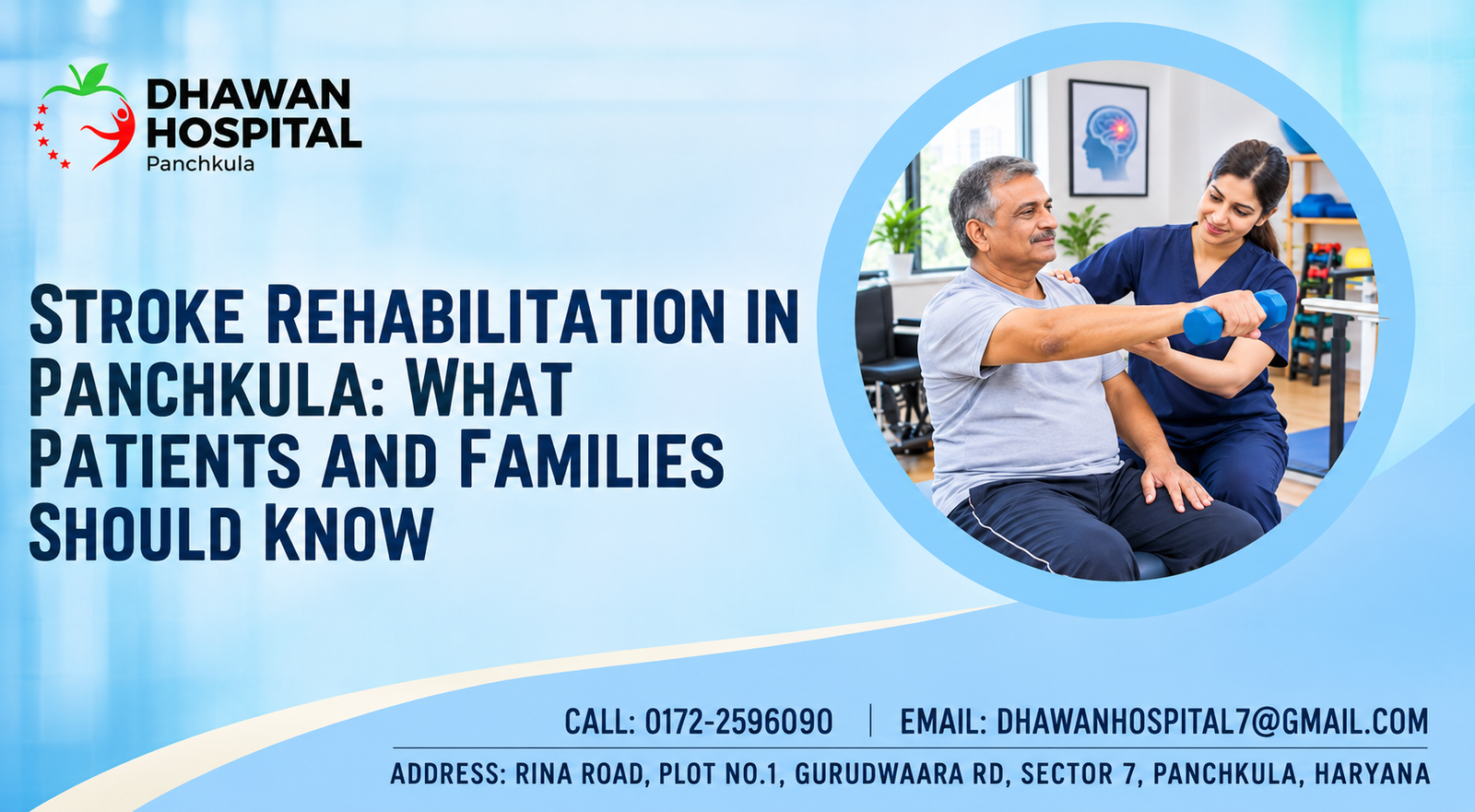
Are you looking for stroke rehabilitation in Panchkula for yourself or a family member recovering from a stroke? A stroke can affect movement, speech, balance, memory, and the ability to perform daily activities. Recovery can feel challenging, but the right rehabilitation plan can help patients regain lost skills, improve mobility, and become more independent.
Stroke recovery takes time and varies from person to person. Some patients may need physical therapy to improve muscle strength, while others may benefit from speech therapy or occupational therapy. At Dhawan Hospital, patients can access physiotherapy and rehabilitation services along with neurological care to support their recovery needs. Understanding the stroke recovery stages, available therapies, and ways families can provide support can make the journey easier.
Why Is Rehabilitation Important After a Stroke?
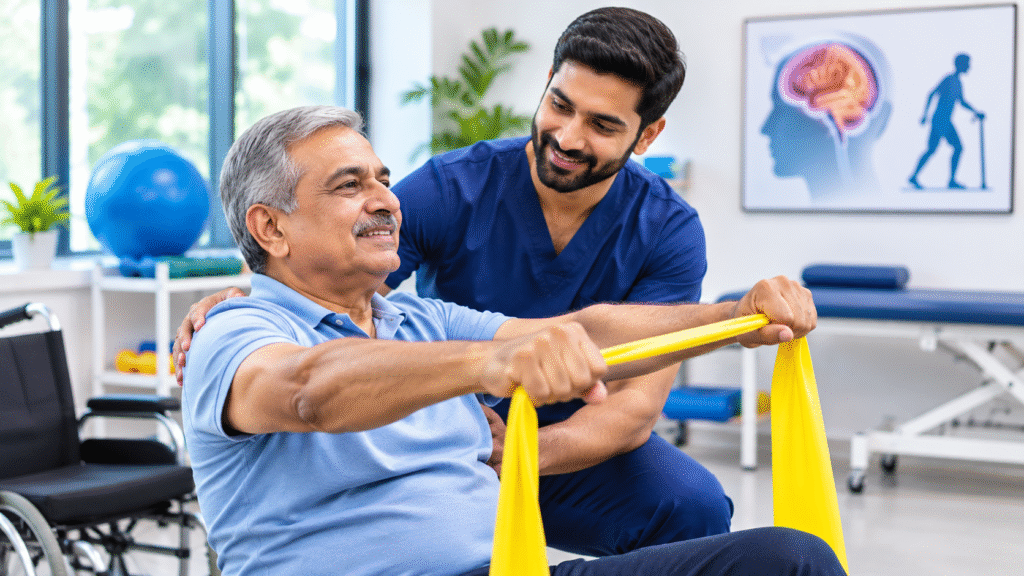
Stroke rehabilitation in Panchkula helps patients regain lost abilities, improve strength, and become more independent. It focuses on movement, speech, balance, and daily activities. Starting rehabilitation after stroke at the right time can support recovery and improve quality of life.
Key benefits of post-stroke rehabilitation include:
- Improves Mobility: Physical therapy helps build strength, balance, and coordination.
- Supports Communication: Speech therapy helps patients with speaking and understanding difficulties.
- Builds Daily Skills: Occupational therapy helps with dressing, eating, and other daily tasks.
- Improves Confidence: Regular therapy can support emotional well-being and independence.
- Reduces Fall Risk: Guided exercises help improve balance and safer movement.
Every patient’s stroke recovery process is different. A personalised treatment plan, consistent therapy, and family support can make post-stroke rehabilitation more effective.
What Are the Different Types of Stroke Rehabilitation in Panchkula?
Different types of stroke rehabilitation help patients regain abilities affected by a stroke. The treatment plan depends on the patient’s condition and recovery goals. Common types of stroke recovery treatment include:
- Physical Therapy: Improves muscle strength, walking, balance, and coordination.
- Speech Therapy: Helps with speaking, communication, and swallowing difficulties.
- Occupational Therapy: Helps patients perform daily tasks like dressing, eating, and bathing.
- Cognitive Rehabilitation: Supports memory, attention, and problem-solving skills.
- Balance and Mobility Training: Improves stability and helps patients move safely.
A personalized post-stroke rehabilitation in Panchkula plan with regular therapy can support stroke recovery and help patients become more independent.
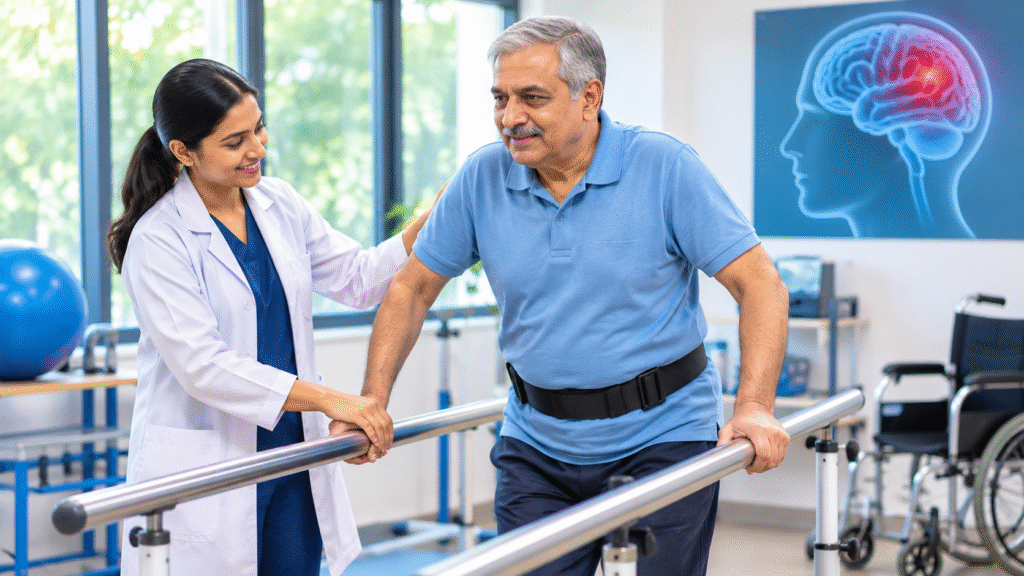
What Are the Common Challenges During Stroke Recovery?
Stroke recovery can involve physical, mental, and emotional challenges. These may affect a patient’s daily activities and independence. Common challenges during stroke recovery include:
- Muscle Weakness: Limited movement in the arms, legs, or one side of the body.
- Speech Problems: Difficulty speaking or understanding conversations.
- Balance Issues: Trouble walking, standing, or maintaining stability.
- Memory Problems: Difficulty with concentration and remembering things.
- Emotional Changes: Anxiety, frustration, or depression.
Regular neurological rehabilitation, medical guidance, and family support can help patients manage these challenges and improve their stroke recovery and rehabilitation.
How Can Family Members Support Stroke Patients During Recovery?
Family members play an important role in stroke rehabilitation in Panchkula by providing emotional support and helping patients with daily activities. Consistent family support during stroke recovery can improve confidence and motivation.
Here are a few ways families can help:
- Encourage Therapy: Support regular physiotherapy and speech therapy sessions.
- Assist with Daily Tasks: Help with eating, dressing, bathing, and walking.
- Keep the Home Safe: Remove obstacles and reduce fall risks.
- Offer Emotional Support: Be patient and encourage small improvements.
- Follow Medical Advice: Help manage medicines and follow-up appointments.
Proper home care for stroke patients, patience, and regular support can make stroke recovery and rehabilitation easier to manage.
About Dhawan Hospital
Dhawan Hospital is a NABH-certified multispeciality hospital in Panchkula, committed to providing reliable and patient-focused healthcare. With over 20 years of experience, the hospital offers medical services across various specialities, including neurology, physiotherapy, and rehabilitation.
The hospital has a team of experienced doctors and healthcare professionals, along with modern facilities and 24/7 emergency and ICU support. Its physiotherapy and rehabilitation services focus on improving movement, strength, and physical function through personalised care.
When Should You Seek Medical Help During Stroke Recovery?
Patients should seek medical help if they experience new symptoms, worsening weakness, repeated falls, severe pain, or sudden changes in speech or movement during stroke rehabilitation in Panchkula. These signs may indicate a medical problem that needs attention.
Seek immediate emergency care if you notice:
- Sudden face drooping or arm weakness.
- New speech or vision problems.
- Severe headache or sudden confusion.
- Chest pain or difficulty breathing.
- Sudden loss of balance or coordination.
Regular medical check-ups and timely stroke recovery treatment help doctors monitor progress and adjust rehabilitation plans. Never ignore new or sudden symptoms, as they may indicate another stroke.
Why Choose Dhawan Hospital for Stroke Rehabilitation in Panchkula?
Choosing the right healthcare facility is important for patients recovering from a stroke. Dhawan Hospital offers neurological care and physiotherapy services to support patients who need stroke rehabilitation in Panchkula.
Here are some reasons to consider Dhawan Hospital:
- Neurology Services: Access to neurological evaluation and care from experienced specialists.
- Physiotherapy and Rehabilitation: Support to improve movement, strength, and physical function.
- Experienced Medical Team: Doctors and healthcare professionals across multiple specialities.
- NABH-Certified Facility: Focus on quality standards and patient safety.
- 24/7 Emergency and ICU Support: Round-the-clock care for patients who need emergency medical attention.
- Patient-Focused Approach: Care that considers each patient’s health needs and recovery goals.
With its focus on stroke care and rehabilitation, Dhawan Hospital Panchkula aims to support patients through medical care and rehabilitation services. A suitable recovery plan, regular assessment, and family involvement can help patients work towards greater independence.
Get Support for Stroke Rehabilitation in Panchkula
Recovering from a stroke takes time, regular medical care, and the right rehabilitation support. If you or a family member needs stroke rehabilitation in Panchkula, consult a healthcare professional to understand the available treatment options. Dhawan Hospital Sector 7 Panchkula offers neurology, physiotherapy, and rehabilitation services to support patients based on their individual needs.
Contact Information
Dhawan Hospital
Address: Plot Number 1, Dhawan Hospital, Rina Road, Gurudwaara Rd, Sector 7, Panchkula, Haryana
Phone: 9368039657
Email: dhawanhospital7@gmail.com
Conclusion
Stroke recovery requires patience, regular medical care, and consistent rehabilitation. Physical therapy, speech therapy, and family support can help patients regain important skills and improve daily independence.
If you are considering stroke rehabilitation in Panchkula, consult a healthcare professional to choose a recovery plan based on the patient’s needs. The right guidance and ongoing support can make the recovery journey more manageable.
FAQs – Stroke Rehabilitation in Panchkula: What Patients and Families Should Know
Q1. What is stroke rehabilitation?
Ans. Stroke rehabilitation is a treatment process that helps patients regain abilities affected by a stroke. It may include physical, speech, occupational, and cognitive therapy based on individual needs.
Q2. When should stroke rehabilitation begin?
Ans. Rehabilitation can begin once the patient is medically stable and the treating team considers it safe. Early, guided therapy may support better recovery.
Q3. How long does stroke recovery take?
Ans. Stroke recovery time varies from person to person. Some patients improve within weeks, while others may need months or longer to regain their abilities.
Q4. What exercises help stroke patients recover?
Ans. Guided walking, balance, stretching, and strengthening exercises may help improve movement. A physiotherapist should recommend exercises based on the patient’s condition.
Q5. Can physiotherapy help after a stroke?
Ans. Yes. Stroke physiotherapy can help improve muscle strength, balance, coordination, and mobility. The treatment plan depends on the patient’s abilities and recovery goals.