Book Appointment Now

Early Signs of Stroke: Symptoms You Should Never Ignore
Are you searching for the early signs of stroke because you are worried about sudden changes in your health or a loved one’s condition? A stroke can happen without much warning and may affect a person’s speech, movement, vision, or ability to think clearly. Recognising the early symptoms of stroke is important because quick medical attention can help reduce brain damage and improve the chances of recovery.
Common warning signs include face drooping, weakness in one arm, sudden speech difficulty, vision changes, and loss of balance. These warning signs of a stroke should never be ignored, even if they disappear after a few minutes. Dhawan Hospital offers 24/7 emergency and ICU support to help patients access urgent medical care. Understanding stroke symptoms, knowing how to use the FAST method, and acting quickly can make a critical difference.
What Is a Stroke?
A stroke occurs when the blood supply to part of the brain is blocked or when a blood vessel in the brain bursts. As a result, brain cells do not receive enough oxygen and nutrients, which can cause them to become damaged or die. This is why recognising the early signs of stroke and getting immediate medical help is so important.
There are two main types of stroke:
- Ischemic stroke: This happens when a blood clot blocks a blood vessel supplying the brain. It is the most common type of stroke.
- Hemorrhagic stroke: This occurs when a blood vessel in the brain ruptures and causes bleeding in or around the brain.
The causes of stroke vary, but both blocked blood flow and bleeding can lead to serious brain injury. Early diagnosis and the right treatment can help limit damage and improve a patient’s chances of recovery.
What Are the Early Signs of a Stroke?
The early signs of stroke often appear suddenly and may affect a person’s face, arms, speech, vision, or balance. These early symptoms of stroke can vary from person to person, but they should never be ignored. Even one sudden symptom may indicate a medical emergency.
Here are some common warning signs of a stroke to watch for:
- Face drooping: One side of the face may look uneven, or the person may struggle to smile.
- Arm weakness: One arm may feel weak or numb. The person may be unable to raise both arms evenly.
- Sudden speech difficulty: Speech may become unclear, slurred, or difficult to understand. The person may also struggle to find the right words.
- Vision problems: Sudden blurred vision, double vision, or loss of vision in one or both eyes may occur.
- Loss of balance: A person may suddenly feel dizzy, unsteady, or have trouble walking.
- Severe headache: A sudden, extremely painful headache without a clear cause can be a warning sign, particularly with a hemorrhagic stroke.
- Sudden confusion: The person may struggle to understand simple instructions or become disoriented.
Recognising these common symptoms of stroke early and seeking emergency medical care without delay can help reduce brain damage and improve the chances of recovery.
What Is the FAST Method for Recognising Stroke Symptoms?
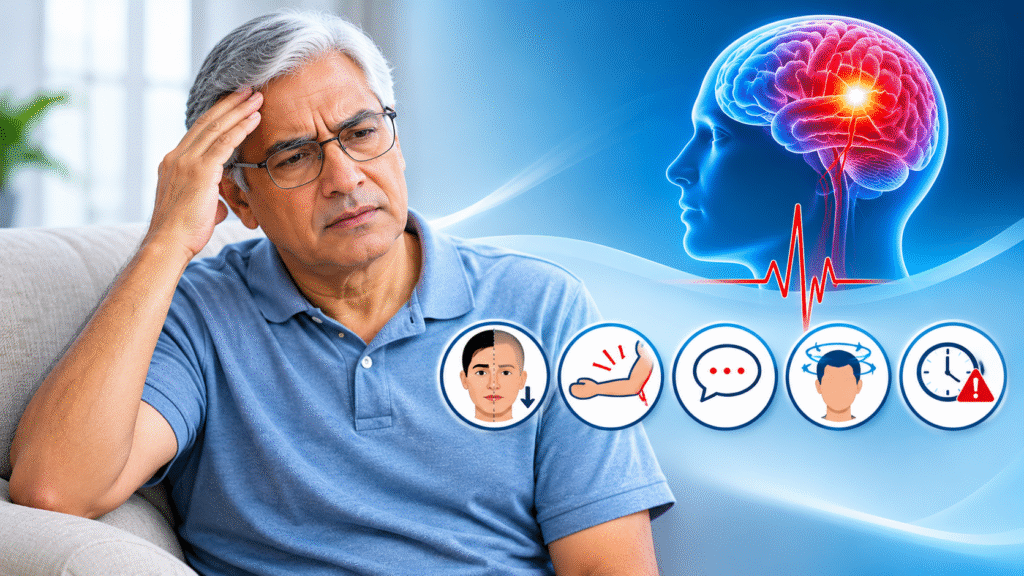
The FAST method is a simple way to recognise common stroke symptoms and understand when to seek emergency help. It focuses on four key warning signs that can appear suddenly. Knowing these FAST stroke symptoms can help you act quickly when someone may be having a stroke.
- F – Face Drooping: Ask the person to smile. Check whether one side of their face droops or looks uneven.
- A – Arm Weakness: Ask them to raise both arms. Notice if one arm feels weak, numb, or starts to fall.
- S – Speech Difficulty: Ask them to repeat a simple sentence. Listen for slurred speech, unclear words, or difficulty speaking.
- T – Time to Call Emergency Services: If you notice any of these signs, call emergency services immediately. Note when the symptoms started or when the person was last seen well.
Recognising FAST stroke symptoms and acting immediately can help patients receive timely stroke emergency treatment and reduce the risk of serious brain damage.
What Are the Common Risk Factors for Stroke?
Several health conditions and lifestyle habits can increase the risk of stroke. Some risk factors for stroke can be managed through medical care and healthy habits, while others cannot be changed.
Common risk factors include:
- High Blood Pressure: Can damage blood vessels and increase stroke risk.
- Diabetes: High blood sugar can damage blood vessels over time.
- High Cholesterol: Can cause plaque buildup in arteries.
- Smoking: Damages blood vessels and increases clot formation.
- Heart Conditions: Atrial fibrillation can lead to blood clots.
- Obesity and Inactivity: Can contribute to other stroke-related conditions.
- Age and Family History: Stroke risk increases with age and may be higher with a family history.
Managing these causes of stroke through regular check-ups, prescribed treatment, a healthy diet, and exercise can help lower your risk.
About Dhawan Hospital
Dhawan Hospital is a trusted multispeciality hospital in Panchkula, providing patient-focused care across various medical specialities. With over 20 years of experience and trust from 150K+ patients, the hospital offers modern medical facilities and experienced healthcare professionals.
The hospital provides 24/7 emergency and ICU support, along with services in neurology, medicine, surgery, and critical care. Its NABH-certified facility focuses on timely medical attention, accurate diagnosis, and personalised treatment to support patients during emergencies and recovery.
When Should You Seek Emergency Care for Stroke Symptoms?
Seek emergency medical care immediately if you notice any sudden early signs of stroke, such as face drooping, arm weakness, speech difficulty, vision loss, or loss of balance. Even one warning sign can indicate a stroke and requires urgent attention.
Follow these steps while waiting for medical help:
- Call emergency services immediately. Do not wait for symptoms to improve.
- Note the time when symptoms started or when the person was last seen well.
- Do not give food, water, or medication unless instructed by a medical professional.
- Keep the person safe and follow the emergency team’s instructions.
Even if symptoms disappear within a few minutes, they may indicate a mini-stroke (TIA). Getting stroke emergency treatment without delay is important because early medical care can help reduce brain damage and serious complications.
Why Choose Dhawan Hospital for Stroke Care in Panchkula?
Choosing the right hospital during a medical emergency is important, especially when someone shows early signs of stroke. Stroke requires immediate medical evaluation, accurate diagnosis, and timely treatment to reduce the risk of serious complications. Dhawan Hospital provides emergency and critical care support to help patients access medical attention when they need it.
Here are some reasons to consider Dhawan Hospital for stroke care in Panchkula:
- 24/7 Emergency & ICU Support: The hospital provides round-the-clock emergency and intensive care facilities for patients who need urgent medical attention.
- Neurology Services: Patients can access neurological evaluation to help identify symptoms affecting the brain and nervous system.
- NABH-Certified Facility: Dhawan Hospital follows recognised healthcare standards with a focus on quality, patient safety, and organised medical care.
- Experienced Medical Team: Doctors and healthcare professionals across multiple specialities support patient evaluation and treatment.
- 20+ Years of Experience: The hospital has served patients in Panchkula and nearby areas for over two decades.
- Multispeciality Care: Access to different medical departments supports coordinated care when patients need evaluation from more than one speciality.
Recognising the early signs of stroke and reaching a hospital without delay can make an important difference. If you notice sudden face drooping, arm weakness, speech difficulty, or vision changes, seek emergency medical care immediately.
Get Timely Medical Help for Early Signs of Stroke in Panchkula
If you notice sudden early signs of stroke, such as face drooping, arm weakness, speech difficulty, or vision loss, seek emergency medical care immediately. Dhawan Hospital provides 24/7 emergency and ICU support in Panchkula to help patients access timely medical evaluation and care.
Contact Information
Dhawan Hospital
Address: Plot Number 1, Dhawan Hospital, Rina Road, Gurudwaara Rd, Sector 7, Panchkula, Haryana
Phone: 9368039657
Email: dhawanhospital7@gmail.com
Conclusion
Recognising the early signs of stroke and understanding the warning signs of a stroke can help save lives. Symptoms such as face drooping, arm weakness, sudden speech difficulty, and vision changes should never be ignored. Seeking immediate medical attention can help reduce the risk of serious complications.
Knowing the FAST method and getting timely stroke emergency treatment are important steps towards better outcomes. Dhawan Hospital provides 24/7 emergency and ICU support to help patients access urgent medical care in Panchkula.
FAQs – Early Signs of Stroke: Symptoms You Should Never Ignore
Q1. What are the first warning signs of a stroke?
Ans. The first warning signs include face drooping, arm weakness, sudden speech difficulty, vision changes, and loss of balance.
Q2. Can stroke symptoms appear suddenly?
Ans. Yes, stroke symptoms often develop suddenly and may affect speech, movement, vision, or balance.
Q3. What is the FAST method for stroke?
Ans. FAST stands for Face drooping, Arm weakness, Speech difficulty, and Time to call emergency services.
Q4. Can stroke symptoms disappear on their own?
Ans. Yes, symptoms may disappear temporarily during a mini-stroke (TIA), but emergency medical evaluation is still necessary.
Q5. What causes a stroke?
Ans. A stroke occurs when blood flow to the brain is blocked or a blood vessel in the brain bursts.