Book Appointment Now

Migraine vs. Headache: How to Identify the Difference
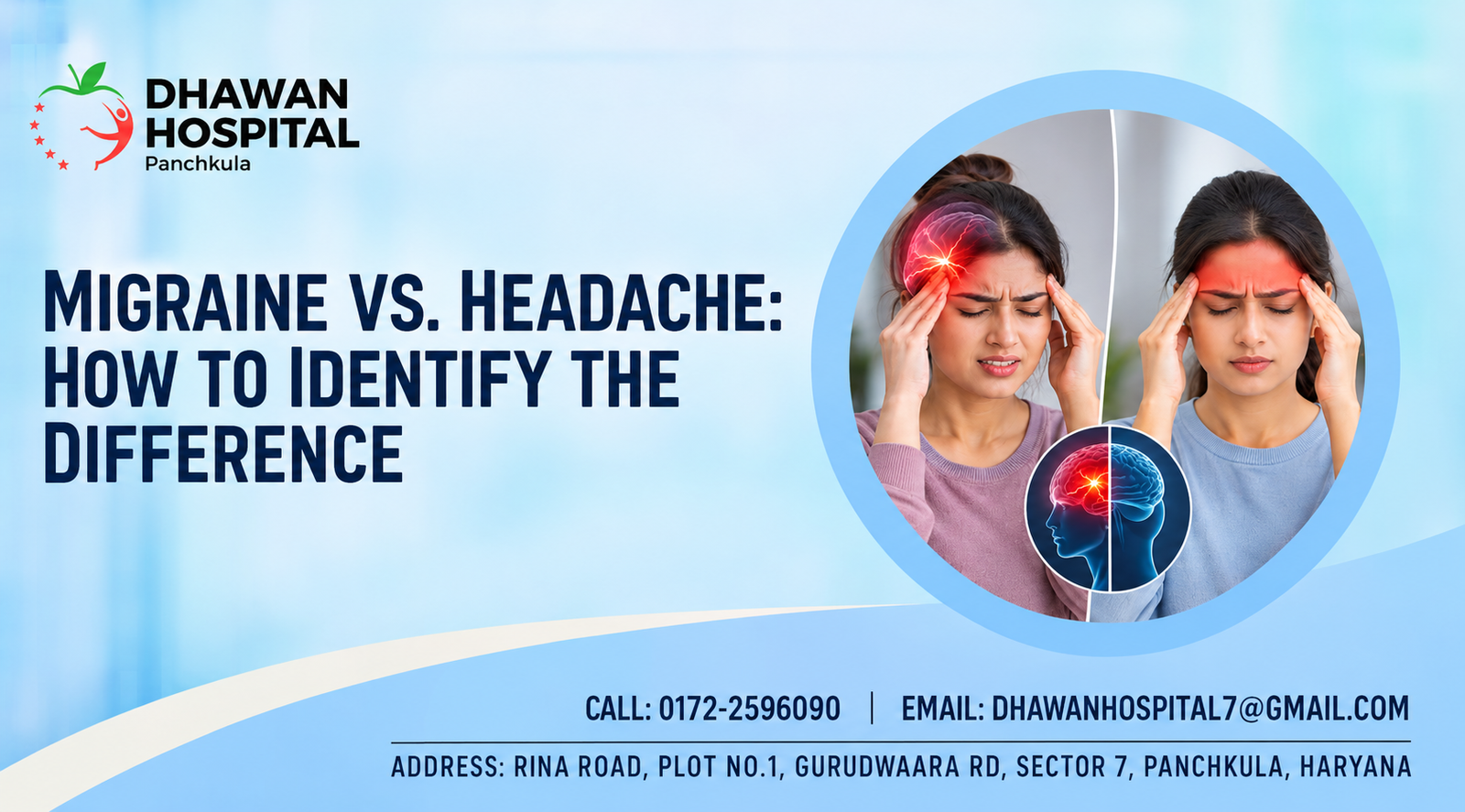
Are you searching for migraine vs. headache to understand why you experience frequent head pain? Although both conditions cause discomfort, their symptoms, intensity, and effects on daily life can differ. Knowing the difference between migraine and headache can help you identify possible causes and understand when to seek medical care.
A regular headache may cause mild to moderate pressure or pain, while a migraine can cause severe throbbing pain, nausea, and sensitivity to light and sound. Recognising common migraine symptoms and common headache symptoms can help you understand what you may be experiencing. Dhawan Hospital offers neurological care to help patients with headache-related concerns.
Quick Answer
A headache usually causes mild to moderate pain or pressure in the head, while a migraine is a neurological condition that can cause severe, throbbing pain, nausea, and sensitivity to light and sound. Understanding migraine vs. headache symptoms can help you recognise the difference and seek the right medical care.
Key Takeaway
- Headaches often cause pressure, tightness, or dull pain in the head.
- Migraines can cause severe, throbbing pain, often on one side of the head.
- Common migraine symptoms include nausea, vomiting, and sensitivity to light and sound.
- Stress, poor sleep, dehydration, and certain foods can trigger headaches and migraines.
- Migraine treatment may include prescribed medicines and lifestyle changes.
- Frequent, severe, or unusual headaches need medical evaluation.
- Sudden severe head pain or new neurological symptoms require immediate medical attention.
Migraine vs. Headache: Key Differences
The main difference between a migraine and a regular headache is the pain intensity and associated symptoms. A headache often causes pressure or dull pain, while a migraine can cause severe, throbbing pain with nausea and sensitivity to light or sound. Understanding migraine vs. headache can help you recognise your symptoms.
| Feature | Regular Headache | Migraine |
| Pain Type | Dull or pressing | Throbbing or pulsing |
| Location | Often both sides | Often one side |
| Intensity | Mild to moderate | Moderate to severe |
| Duration | Minutes to hours | 4 to 72 hours |
| Other Symptoms | Usually fewer | Nausea and light sensitivity |
Recognising migraine vs. headache pain can help you describe your symptoms more clearly to a doctor. However, symptoms can overlap, so a proper medical evaluation is important for an accurate diagnosis.
How to Know If Your Headache Is a Migraine
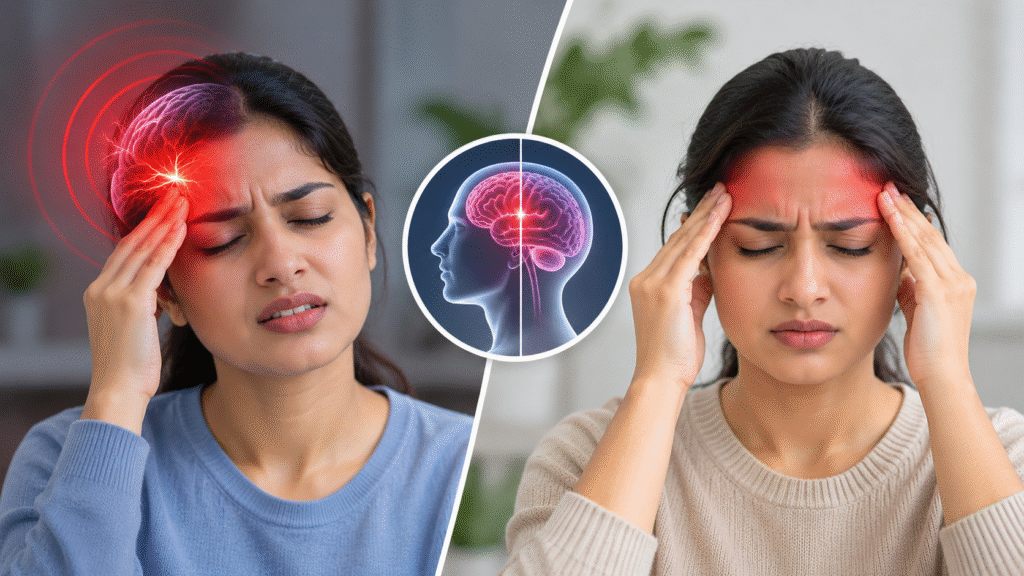
You may have a migraine if your headache causes throbbing pain, nausea, or sensitivity to light and sound. These migraine warning signs can help you understand whether your pain is more than a regular headache.
Watch for these symptoms:
- One-Sided Headache: Pain often affects one side of the head, though both sides can be involved.
- Throbbing Pain: The pain may feel like a repeated pulse or heartbeat.
- Nausea and Vomiting: You may feel sick or vomit during an episode.
- Light and Sound Sensitivity: Bright lights and loud sounds may make the pain worse.
- Migraine Aura: Some people experience flashing lights, blind spots, or tingling before or during a migraine.
If you experience recurring headaches with these symptoms, consult a doctor for proper migraine diagnosis. A medical evaluation can help identify the cause and guide suitable treatment.
What Are the Treatment Options for Migraines and Headaches?
Treatment depends on the cause, symptoms, and frequency of pain. Doctors may recommend migraine vs headache treatment based on the patient’s condition.
Common options include:
- Pain Relief Medicines: Suitable medicines can provide headache relief.
- Migraine Medicines: Prescribed drugs can help manage migraine symptoms.
- Preventive Treatment: May reduce attacks in people with chronic migraine.
- Lifestyle Changes: Proper sleep, hydration, and balanced meals can help manage migraine triggers.
- Stress Management: Relaxation and regular exercise may reduce headache symptoms.
Avoid frequent painkiller use without medical advice. Consult a doctor for a suitable treatment plan.
About Dhawan Hospital
Dhawan Hospital is a NABH-certified multispeciality hospital in Sector 7, Panchkula, providing patient-focused healthcare across various medical specialities. The hospital offers neurology services for brain and nerve-related conditions, supported by experienced medical professionals.
The hospital’s team includes Dr. Loveleen Aggarwal, Consultant – Neurology, along with specialists from other departments. With 24/7 emergency and ICU services, Dhawan Hospital is committed to providing reliable medical care and support for patients.
When Should You See a Doctor for a Headache or Migraine?
You should see a doctor if headaches are frequent, severe, getting worse, or affecting your daily activities. Recognising migraine warning signs and signs of a severe headache can help you seek timely medical care.
Seek immediate medical attention if you experience:
- Sudden, extremely severe headache.
- Weakness, numbness, or difficulty speaking.
- Sudden vision loss or confusion.
- Fever with a stiff neck.
- Headache after a head injury.
If you notice a change in your usual headache pattern or experience frequent migraine symptoms, consult a neurologist. Timely migraine diagnosis can help identify the cause and guide appropriate treatment.
Why Choose Dhawan Hospital for Headache and Migraine Care?
Dhawan Hospital provides neurology services to help patients understand the difference between migraine vs. headache and explore suitable treatment options.
Here are some reasons to consider Dhawan Hospital:
- Neurology Services: Care for brain and nerve-related conditions, including concerns related to migraine symptoms.
- Experienced Neurologist: Consult Dr. Loveleen Aggarwal for neurological concerns and migraine diagnosis.
- Multispeciality Care: Access to specialists across different medical departments.
- NABH-Certified Facility: Focus on healthcare quality and patient safety.
- 24/7 Emergency and ICU Support: Round-the-clock care for medical emergencies, including signs of a severe headache.
- Patient-Focused Approach: Medical guidance based on individual health needs and headache symptoms.
Whether you experience frequent headaches, chronic migraine, or recurring migraine warning signs, timely medical evaluation can help identify the cause and guide suitable treatment.
Get Medical Support for Headaches and Migraines
Frequent headaches or severe migraine symptoms should not be ignored. If you are unsure about the difference between migraine vs. headache, consult a neurologist for proper evaluation and treatment. Dhawan Hospital provides neurological care to help patients understand their symptoms and explore suitable treatment options.
Contact Information
Dhawan Hospital
Address: Plot Number 1, Dhawan Hospital, Rina Road, Gurudwaara Rd, Sector 7, Panchkula, Haryana
Phone: 9368039657
Email: dhawanhospital7@gmail.com
Conclusion
Understanding migraine vs. headache can help you recognise your symptoms and seek timely medical care. While regular headaches may cause pressure or dull pain, migraines can involve severe throbbing pain, nausea, and sensitivity to light and sound. Identifying migraine triggers can also help manage recurring episodes.
If you experience frequent headaches or chronic migraine, consult a neurologist for proper diagnosis and treatment. Timely medical guidance can help you manage pain and improve your quality of life.
FAQs – Migraine vs. Headache: How to Identify the Difference
Q1. What is the main difference between a migraine and a headache?
Ans. A regular headache often causes pressure or dull pain, while a migraine can cause severe, throbbing pain with nausea and sensitivity to light or sound.
Q2. How do I know if my headache is a migraine?
Ans. You may have a migraine if you experience throbbing pain, nausea, vomiting, or sensitivity to light and sound.
Q3. What are the common symptoms of a migraine?
Ans. Common migraine symptoms include severe head pain, nausea, vomiting, sensitivity to light and sound, and sometimes visual disturbances.
Q4. How long does a migraine usually last?
Ans. A migraine attack can last between 4 and 72 hours without effective treatment.
Q5. Can stress trigger migraines and headaches?
Ans. Yes. Stress is a common trigger for both headaches and migraines. Poor sleep, dehydration, and skipped meals may also contribute.